Valuing a cannabis cultivation facility in California is not the same as valuing a commercial building or a piece of agricultural land. The property is one component. The entitlement is another. And the operational profile of the facility, its cultivation type, its tax exposure, its infrastructure, and its position within the local regulatory environment, determines what a buyer will pay and what a seller should expect.
Indoor, greenhouse, and outdoor cultivation facilities are valued differently because they operate differently, are taxed differently, and face different constraints. Understanding those distinctions is the foundation of any credible Broker Opinion of Value in cannabis real estate.
Indoor Cultivation
Indoor cultivation facilities are found across a wide range of California markets. In urban areas like Los Angeles, San Francisco, Oakland, and Richmond, facilities tend to be smaller industrial warehouses retrofitted for cannabis production. In rural municipalities like Woodlake and King City, which have welcomed the industry, operations tend to be significantly larger because space is less constrained and the municipalities actively sought cannabis as an economic driver.
The primary valuation drivers for indoor facilities are canopy square footage, power availability, tax rate, and the technology deployed in the cultivation. A single-stack grow room running HPS lights is a fundamentally different operation than a double- or triple-stack LED facility utilizing vertical space. As municipalities tax cultivation on a per square foot basis, operators are increasingly moving vertical to optimize yield per taxable square foot. The shift from horizontal to vertical cultivation is not a trend. It is a direct economic response to the tax model. A facility that has already made that investment in vertical infrastructure and LED technology commands a premium over one that has not.
Security is a significant valuation factor for indoor facilities, particularly in urban markets. Los Angeles, San Francisco, and Oakland have elevated crime rates and cannabis facilities are high-value targets. The physical security of the building matters: is it a concrete tilt-up with hardened access points, or a metal building with vulnerable entry points? Has the facility been robbed? What security systems and protocols are in place? A buyer evaluating an indoor facility in an urban market is evaluating risk alongside revenue.
Greenhouse Cultivation
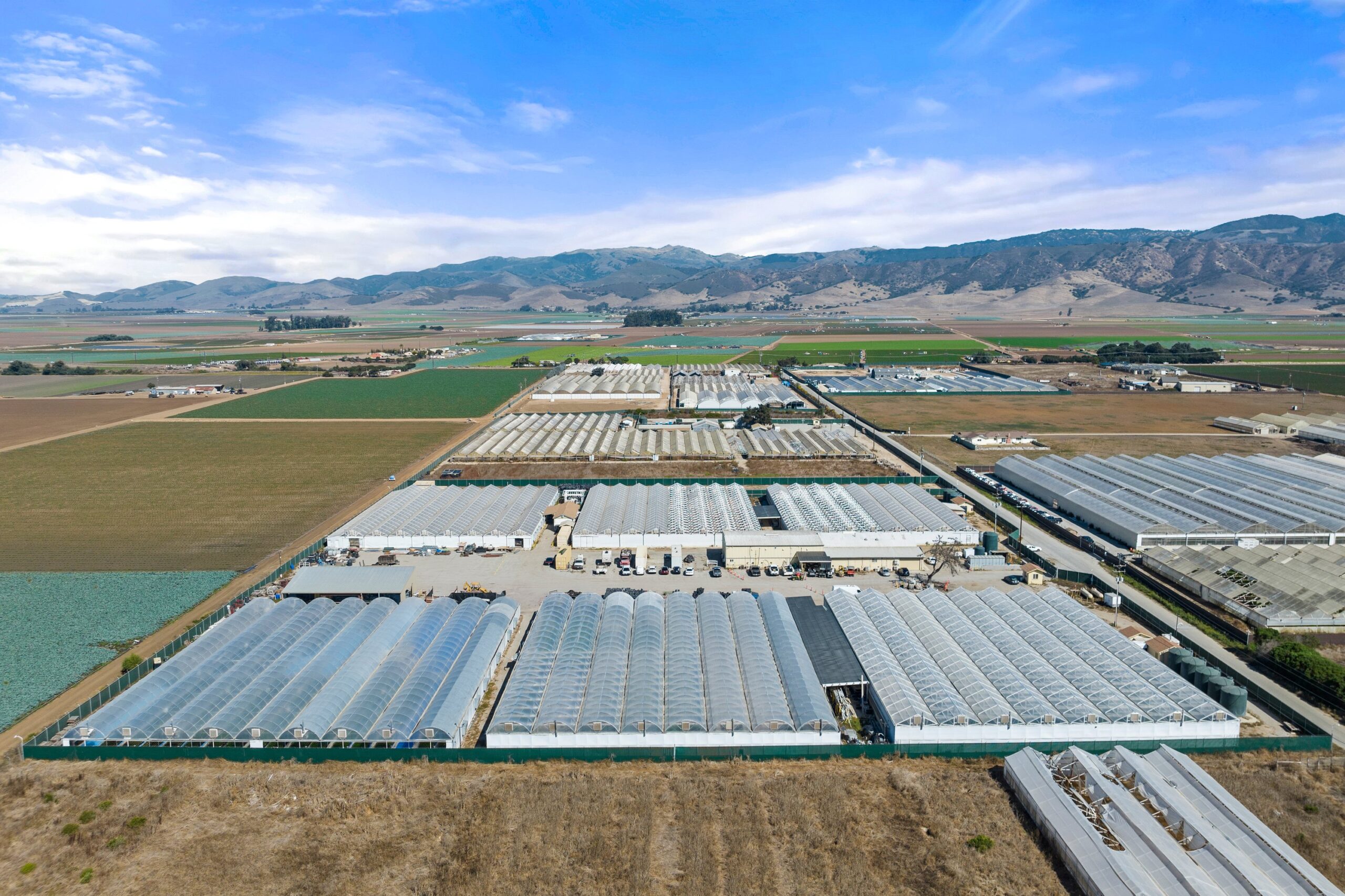
Greenhouse facilities introduce a different set of valuation considerations. Power availability is the first question. Is the facility on three-phase power? Can it facilitate supplemental lighting? Does it already have supplemental lights installed? The answer to these questions determines whether the operation can run as mixed-light, which affects both yield and tax classification.
The size of the facility matters, as does the local tax rate. In Monterey County, the distinction between operating with and without artificial lighting is the difference between $1.46 per square foot for mixed-light and $0.71 per square foot for outdoor classification, a $75,000 annual difference on 100,000 square feet of canopy before accounting for energy costs.
In Carpinteria, in Santa Barbara County, odor abatement requirements add significant cost to greenhouse operations. The community backlash regarding cannabis odor in Carpinteria has been intense and sustained. Since 2018, residents have filed over 3,900 odor complaints, and in March 2026 the Board of Supervisors required all cannabis greenhouse operators in the valley to install carbon scrubbers. Nine operators who failed to comply had their business licenses revoked in April 2026. The cost of scrubber installation, at approximately $22,000 per unit with a recommended density of ten per acre plus electrical upgrades, can be significant for operators evaluating whether to enter or remain in the Carpinteria market.
Stream and creek setback requirements can also significantly impact the value of a greenhouse facility in Santa Barbara County. The county’s ordinance requires cultivation structures to be set back 100 feet from creeks and riparian zones. Many of the greenhouses in the Carpinteria Valley were originally built for cut flowers and did not have to contend with these setback requirements. When those greenhouses converted to cannabis, the setback rules applied, and in some cases operators have had to pull down greenhouse structures that were too close to waterways, reducing the usable footprint of the property and increasing the cost of any retrofit. A buyer evaluating a greenhouse facility in Santa Barbara County needs to understand this exposure before making an offer.
Outdoor Cultivation
Outdoor cultivation valuation is driven primarily by three factors: the municipal tax rate, the property value, and how the local community and regulatory environment treat cannabis operations.
In Santa Barbara County, some of the larger cultivation operations have concentrated in the Cuyama Valley, where property values are lower. But significant operations also exist closer to the coast in Santa Barbara wine country, where land values are higher and the economics are different. In Lake County, there are significant cultivation operations, but the agricultural infrastructure is not as robust. The workforce is thinner, agricultural servicing is more limited, and the topography is hillier. Many of the approved cultivation sites in Lake County are set back in the hills rather than on prime agricultural land, which introduces logistical challenges that affect operating cost and, consequently, valuation.
This is part of what makes San Benito County interesting as a cultivation market. If Measure D passes on June 2, the county’s tax structure would make it the most competitive outdoor cultivation jurisdiction in California, and the available land is actual prime agricultural land, not hillside parcels with access challenges.
Even Monterey County, which has a significant cannabis presence in the Salinas Valley, did not allow cultivation on prime agricultural land. The county’s ordinance directed operators into existing greenhouses and industrial buildings, which is why the Monterey County cannabis landscape looks the way it does today.
One valuation factor that is specific to outdoor cultivation and frequently underestimated is processing infrastructure. Outdoor operations generate significant biomass at harvest. If the operator cannot process on-site, meaning the hanging, drying, curing, bucking, and trimming of cannabis biomass, the logistics and cost of trucking to an off-site processing facility become a material operating expense. In counties like Santa Barbara, where on-site processing requires a separate permit and there is no agricultural exemption for processing structures, this cost is built into the operation permanently. In Lake County, where temporary structures are permitted for processing and drying, the economics are different.
Processing facilities are a critical piece of cannabis infrastructure that is in short supply across California. The availability, proximity, and cost of processing directly affects the valuation of any outdoor cultivation facility, and it is a factor that most brokers do not account for in their analysis.
What a Broker Opinion of Value Includes
A Zaki Properties Broker Opinion of Value for a cannabis cultivation facility evaluates the real estate, the entitlements, and the operational profile as an integrated assessment. The BOV accounts for the municipal permit type, the local tax rate, the facility’s infrastructure and technology, the security profile, the environmental and setback exposure, the processing logistics, and the comparable transaction data available in the market.
This is not a desktop appraisal. It requires getting on the ground, walking the facility, understanding the operation, and evaluating the property within the specific regulatory and market context of its municipality. Every county is different. Every facility is different. The BOV reflects that.
Frequently Asked Questions
How is a cannabis cultivation facility valued differently than a standard commercial property?
A standard commercial property is valued primarily on the real estate: location, size, condition, and comparable sales. A cannabis cultivation facility adds the municipal permit, the state license, the tax rate, the cultivation technology, the security profile, and the processing infrastructure to the valuation. The entitlement and the operational profile can represent a significant portion of the total value.
What is the difference between valuing indoor, greenhouse, and outdoor cultivation?
Indoor valuation focuses on canopy square footage, power availability, vertical cultivation technology, tax rate, and security. Greenhouse valuation focuses on power availability, supplemental lighting capability, odor abatement costs, and setback exposure. Outdoor valuation focuses on the municipal tax rate, property value, community and regulatory environment, and proximity to processing infrastructure.
Why does processing infrastructure affect cultivation facility value?
Outdoor and greenhouse operations generate significant biomass at harvest that must be processed. If the facility cannot process on-site, the operator must transport product to a licensed processing facility, which adds cost and logistical complexity. The availability and proximity of processing infrastructure directly affects operating margins and, therefore, the value of the cultivation asset.
Jamie Warm is a Cannabis Advisor at Zaki Properties, a cannabis real estate and business advisory firm operating across California.
805.722.7095 | Jamie@WarmstoneAdvisors.com | zakiproperties.com