If you own a cannabis business in California and you are thinking about selling, the first question is what the business is actually worth. The answer is not a simple multiple of revenue or a percentage of your original investment. A cannabis business valuation in California is a composite of independent value drivers, and in today’s consolidated market, the answer looks different depending on your license type, your location, and whether the operation is producing revenue. Understanding what your cannabis business is worth before you engage a broker or entertain offers is the foundation of a successful exit.
This article explains how cannabis business valuations work from the broker’s perspective: what drives value, what suppresses it, and how to think about pricing in a market where the gap between seller expectations and buyer reality is wider than it has ever been.
Why Cannabis Business Valuations Are Different
A cannabis business cannot be valued the way a restaurant or a conventional manufacturing operation is valued. The license is an independent asset with scarcity value that exists regardless of operating performance. The real estate is often the largest component of total value. And local tax rates directly affect what a buyer is willing to pay, making identical operations in different jurisdictions worth materially different amounts.
These three realities mean that a cannabis business valuation requires a broker who understands how each component contributes to the total, not a generic business valuation formula.
How Different License Types Sell
Different cannabis license types trade on entirely different metrics.
Retail is one of the license types where traditional business valuation metrics apply, because retail generates consistent, measurable net income. As of June 2026, retail dispensaries are trading at roughly four times EBITDA. When a dispensary does not produce consistent and measurable EBITDA, the buyer pool thins out and the asset becomes hard to sell. A lack of EBITDA often signals a poor location. Some buyers believe they can come in and operate it better, and at that point the asset is worth its entitlement value, which would generally be considered a distressed asset. Dispensaries in poor retail locations are among the hardest cannabis assets to find buyers for.
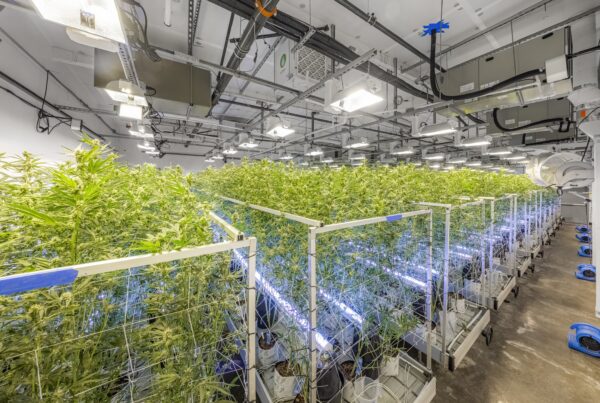
Cultivation does not sell on EBITDA. In practice, cultivation is rarely if ever sold on cash flow. A cultivator evaluates a project on what it can produce on a per-acre or per-light basis, then makes a judgment based on the condition of the facility. Clean, organized facilities attract a different caliber of buyer. For indoor facilities, buyers often value the asset on a per-light basis.
License type also determines where a sale is even possible. Type 7 volatile manufacturing licenses are scarce because very few municipalities permit them. You see Type 7 activity in places like Long Beach, Desert Hot Springs, and Sacramento, while jurisdictions like Los Angeles do not allow them at all. That scarcity makes the license meaningful, but Type 7 facilities have been genuinely hard to sell. License type, license size, and the jurisdiction that issued it each shape what a buyer will pay.
The Role of Taxes in Cannabis Valuation
Local tax rates directly shape cannabis valuations. Cultivation is taxed under different structures depending on the jurisdiction. For outdoor and mixed-light cultivation, some jurisdictions use a square-footage model and others use a gross-receipts model, and the difference materially changes the economics of the operation.
San Benito County is a current example. Measure D passed in June 2026, and the county now has the flexibility to set the cultivation tax anywhere from $1,000 to $10,000 per acre. That range, and the county’s discretion within it, is one reason some of the largest cultivators in the state have secured property in San Benito, including a client of ours. For a fuller breakdown of how county tax decisions move cultivation economics, read San Benito County Measure D: What Outdoor Cannabis Cultivators Need to Know.
Lake County is the counterexample. It opened its doors early to large-scale cannabis cultivation, but most cultivators have since left for more competitive tax environments. Tax rate and location continue to be among the most important factors in what a cannabis operation is worth.
Turnkey Assets Command the Market
The California cannabis industry has consolidated significantly. The operators who remain are experienced, but capital is routinely constrained, which makes seller financing a common occurrence. In this environment, turnkey assets are the ones that trade, and they come in at a premium.
A facility that needs a $500,000 electrical upgrade or a new CUP application is not turnkey, and it is often not sellable as a cannabis asset at all. There was a time, and there still is in some limited-license states, where entitled properties traded at a premium and the entitlement value was worth nearly everything. As the California market narrows, those opportunities are dwindling. Buyers want operations that run on day one.
Why Appraisals Do Not Tell the Whole Story
Conventional appraisals carry little weight in cannabis valuation. Banks typically commission a real property appraisal that values the building as a warehouse, without entitlement value. That number tells a seller almost nothing about what their cannabis business is actually worth, because it ignores the license, the entitlement, and the tax environment that drive real-world pricing. In practice, a cannabis real estate appraisal is worth the paper it is written on. A broker opinion of value from a cannabis specialist accounts for the components an appraisal leaves out.
The Resources a Cannabis Broker Brings
A cannabis business sale draws on experience and relationships that a general commercial broker does not have. As former cannabis operators, we bring a genuine understanding of how these businesses run, what the assets are actually worth, and how to move a transaction to closing. What a cannabis broker brings to the table includes:
- a genuine understanding of business operations, grounded in having operated in the industry
- a working knowledge of the value of the equipment, fixtures, and furniture, the FF&E that a general broker overlooks
- an understanding of entitlement value, entitlement timelines, and how to work with individual municipalities and the DCC
- escrow and title companies that insure cannabis transactions for title insurance
- cannabis attorneys who navigate membership interest purchase agreements, master service agreements, asset purchase agreements, and license assignments where necessary
- a network of referrals for compliance consultants handling permitting and state license work
These relationships and this operating experience are what move a cannabis transaction from a listing to a closing.
Jamie Warm is the Principal Broker of Zaki Properties, the cannabis real estate advisory division of Warmstone Advisors. DRE# 02192518. Brokerage DRE# 02378475. 351 Paseo Nuevo, Floor 2, Santa Barbara, CA 93101. 805.722.7095. zakiproperties.com.
This article is for informational purposes only and does not constitute legal, tax, or regulatory advice. Cannabis regulations vary by jurisdiction and change frequently. Consult with a licensed attorney and tax advisor for guidance specific to your situation.
Frequently Asked Questions
What multiple do cannabis businesses sell for in California?
It depends entirely on the license type. Retail dispensaries with consistent net income trade around four times EBITDA as of June 2026. Cultivation does not sell on EBITDA at all; it sells on production capacity per acre or per light and the condition of the facility. When an operation is not producing revenue, the value defaults to the real estate plus the entitlement.
Does the local tax rate affect what my cannabis business is worth?
Yes, directly. Two identical operations in different jurisdictions can be worth materially different amounts because of local cannabis tax. Cultivation may be taxed on a square-footage or a gross-receipts basis depending on the county, and high-tax jurisdictions suppress value. Buyers evaluate the tax burden as part of the operating cost structure.
What is my cultivation facility worth if it is not producing revenue?
When a cultivation operation is losing money or sitting idle, the value is the real estate plus the entitlement, not a business multiple. Buyers underwrite what they can produce in the facility and what it would cost to bring it to full operation. A clean, turnkey facility in a workable tax jurisdiction holds value. One that needs significant capital to operate often is not sellable as a cannabis asset.
How do I find out what my cannabis business is worth?
Start with a broker opinion of value from a broker who specializes in cannabis real estate and business transactions. The BOV should examine the license, the real estate, the tax environment, the operational performance, and the infrastructure independently, then produce an indicated value range based on comparable transactions, not a single number from a generic formula.