
San Benito Measure D is a ballot measure that will go before county voters on June 2, 2026. If passed, it will make this Central Coast agricultural county the most tax-competitive outdoor cannabis cultivation jurisdiction in California. For outdoor cultivators operating at scale, understanding what Measure D does, and what it means for real estate and operational economics, matters before the results come in.
How We Got Here
San Benito County has been trying to build a legal cannabis market for nearly a decade. In June 2018, voters passed Measure C, authorizing commercial cannabis cultivation in the unincorporated county and establishing a tax structure to go with it. The rates set under Measure C ranged from $3 to $17 per square foot annually.
The tax structure enacted under Measure C was designed without reference to what the competitive landscape was in other municipalities. The two outdoor cultivation markets that ultimately prevailed at scale in California were Santa Barbara County, which taxed cultivation at 4% of gross receipts, and Lake County, which taxed on a per square foot basis. At rates between $3 and $17 per square foot, San Benito was not competitive with either jurisdiction, and the market responded accordingly.
Six years passed. Not a single licensed outdoor cultivator established operations in the county.
By early 2025, the Board of Supervisors acknowledged what the market had been saying for six years. In February 2025, they unanimously approved a temporary cultivation tax exemption while developing a replacement structure. According to BenitoLink’s reporting on Measure D, four cultivators have been approved in the county and one more is pending since the exemption took effect. The county went from zero licensed outdoor operators in six years to active operations in the ground in under a year.
That is the signal.
What Measure D Actually Does
On February 24, 2026, the San Benito County Board of Supervisors voted 4-1 to place Measure D on the June 2 ballot.
Measure D does not set a specific tax rate. It asks voters to authorize replacing the existing per square foot structure with a per acre structure, with the Board retaining authority to set the exact rate within a range of $1,000 to $10,000 per acre annually. If Measure D passes, the Board sets the rate. Per BenitoLink, Supervisor Kollin Kosmicki noted at the February 24 meeting that a rate of $2,000 per acre had been discussed with industry stakeholders.
Blancarte, founder of Orso Farms and one of the four operators now approved to cultivate in San Benito County, put it plainly: “The previous tax structure was not really set up for outdoor cultivation. It was really set for indoor cultivation in mind. Outdoor cultivation is on a much larger scale, and the tax structure needs to understand the difference between indoor and outdoor cultivation. Square footage is not how farmers work.”
The Numbers
One acre is 43,560 square feet. Here is what each rate within the Measure D authorized range translates to on a per square foot basis.
| Measure D Rate (Per Acre) | Equivalent Per Sq Ft |
|---|---|
| $1,000 | $0.023 |
| $2,000 | $0.046 |
| $3,000 | $0.069 |
| $4,000 | $0.092 |
| $5,000 | $0.115 |
| $6,000 | $0.138 |
| $7,000 | $0.161 |
| $8,000 | $0.184 |
| $9,000 | $0.207 |
| $10,000 | $0.230 |
For context: Lake County’s current outdoor cultivation tax, confirmed by the Lake County Tax Collector, is $0.52 per square foot. Santa Barbara County taxes outdoor cultivation at 4% of gross receipts under Measure T, passed in 2018.
These are structurally different systems. Santa Barbara’s gross receipts tax fluctuates with wholesale price, which has collapsed by more than 50% since 2021. As prices have fallen, so has the county’s tax revenue, dropping from a high of $15.6 million annually to a projected $5.4 million in the current fiscal year, according to the Santa Barbara Independent. Lake County’s per square foot rate is fixed regardless of what the market pays per pound. San Benito’s proposed per acre structure is fixed regardless of canopy size or production volume.
At the $2,000 per acre rate being discussed with growers, an outdoor cultivator running 100 acres in San Benito County would pay $200,000 annually in cultivation tax. The same operator running 100 acres in Lake County, where outdoor cultivation is currently taxed at $0.52 per square foot, would pay approximately $2.26 million on the same canopy footprint. That differential, in a single year, is enough to service the acquisition of a San Benito cannabis farm itself.
Why Operators at Scale Are Paying Attention
California’s licensed cannabis cultivation market has been contracting since 2021. Active cultivation licenses have declined statewide as operators exit markets where the economics no longer work. The operators who remain, and particularly those operating at scale on outdoor acreage, are making deliberate decisions about where to grow based on total cost of operation, not just the price of land.
Tax structure is a material input in that calculation.
A per square foot tax penalizes canopy. Every additional acre under cultivation generates additional tax liability regardless of what the market pays for the output. At scale, this compounds with acreage.
A gross receipts tax ties the county’s revenue to the market and the operator’s exposure to the market. When wholesale prices fall, the tax burden falls with them. That sounds favorable until you account for the administrative complexity of self-reported gross receipts, the audit exposure, and the uncertainty it creates in financial planning. Operators running multi-year business models need to model their tax liability forward. A rate that moves with market conditions cannot be modeled with precision.
A per acre tax is fixed. An outdoor cultivator with 50 acres and an operator with 200 acres pay the same rate per acre. The tax does not punish scale, does not fluctuate with wholesale price, and does not require complex gross receipts reporting. For an operator running a large outdoor operation, the per acre model offers something the other two structures do not: predictability.
The Agricultural Case for San Benito
Tax structure alone does not make a jurisdiction viable for outdoor cultivation at scale. The land has to work.
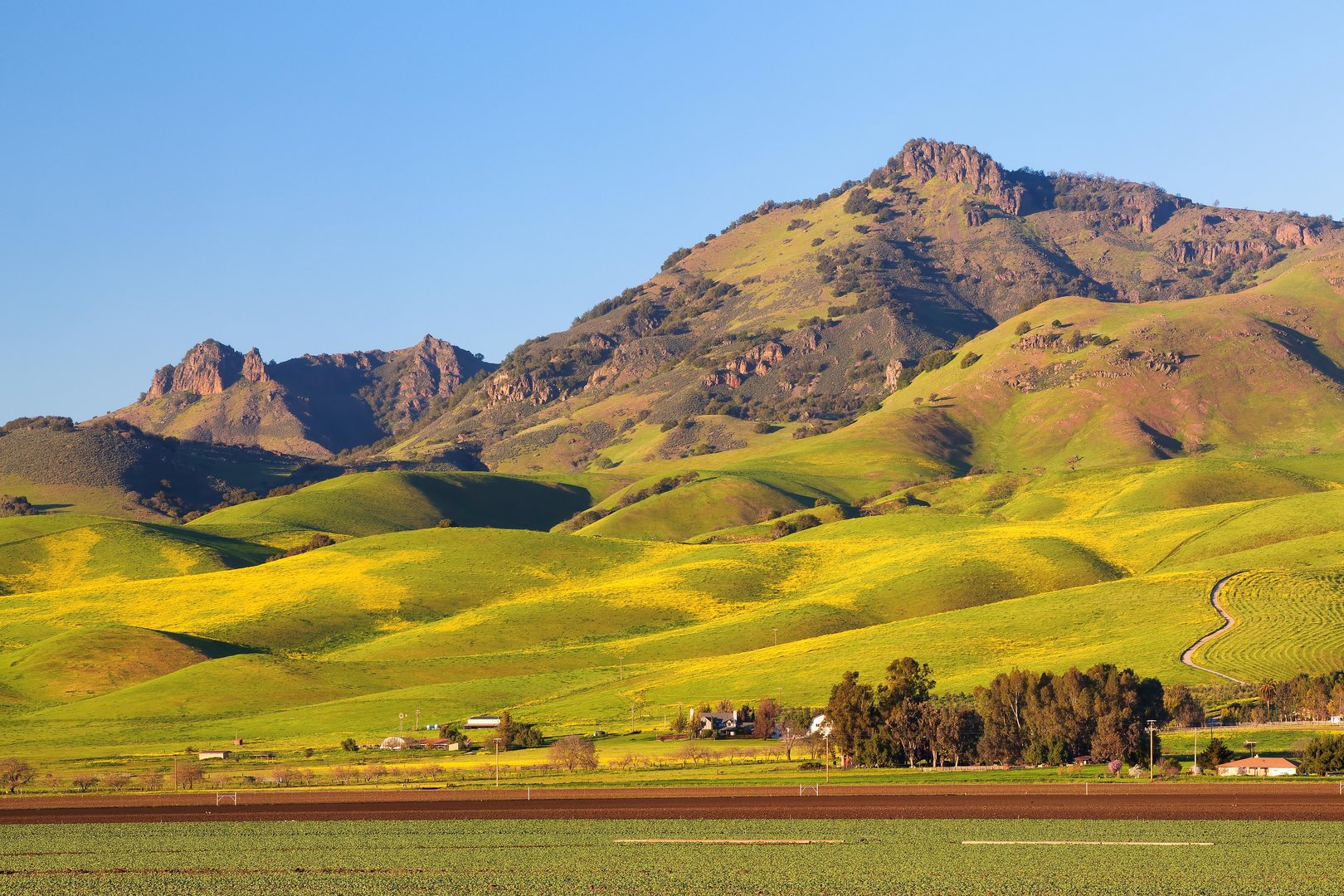
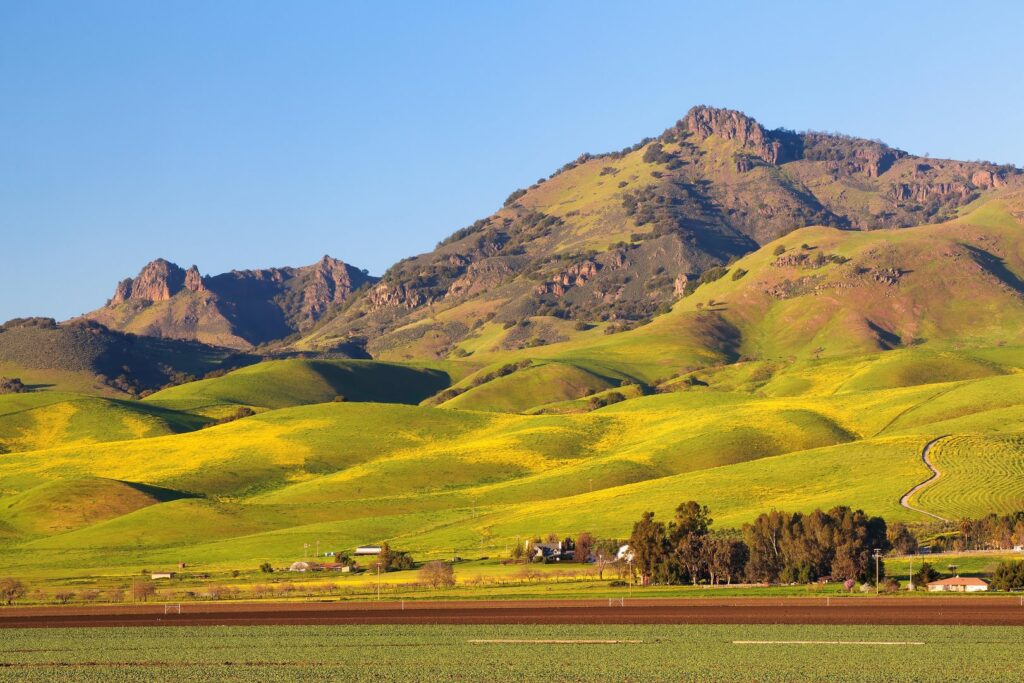
San Benito County has been a functioning agricultural county for generations. The San Benito Valley, centered around Hollister, produces leafy greens, row crops, wine grapes, garlic, and specialty vegetables across a climate that supports year-round agricultural activity. The county has fertile soils, established water infrastructure, and a labor market with deep agricultural roots. These are not secondary considerations for an outdoor cannabis operation. They are the operational foundation.
The county sits between the Salinas Valley to the south and Santa Clara County to the north, with proximity to Interstate 101 and Highway 25. For operators who need to move product to distribution points in the Bay Area or down the Central Coast, the logistics work.
What a Yes Vote Means
If Measure D passes, the Board of Supervisors will set a rate within the $1,000 to $10,000 per acre range. What the vote establishes is the framework, and the framework is the right one for outdoor cultivation at scale.
Land values in jurisdictions with favorable agricultural tax environments reflect that favorability. A San Benito County with the lowest outdoor cultivation tax structure in California is a different real estate market than the one that existed six years ago. Operators evaluating a relocation, an expansion, or an entry into the California outdoor market will run the numbers on San Benito in a way they have not previously had reason to.
The real estate on both sides of that decision, the facilities and land being exited in higher-tax counties and the agricultural parcels being acquired in San Benito, involves licensing complexity, operational due diligence, and transaction structures that require advisors with direct cannabis industry experience. Zaki Properties advises on cannabis real estate transactions across California, including Lake County, Mendocino County, Santa Barbara County, Sonoma County, Los Angeles County, and the Central Coast. The dual escrow structures, entitlement stacks, and operational realities that determine value in these transactions are what Zaki Properties is built to navigate.
The Larger Trend
Measure D is the leading signal of something larger. California’s cannabis industry is consolidating around jurisdictions where the economics work. Tax efficiency is driving that aggregation as directly as any other operational factor. San Benito County’s willingness to redesign its tax structure from scratch, and the immediate operator response to the exemption that preceded it, demonstrates that the market will move when conditions justify it. Other counties watching their cultivation tax revenues contract have the same choice San Benito made: adapt the structure to reflect the industry as it actually operates, or continue losing the operators, the payroll, and the tax base that licensed cultivation generates.
Measure D is the model. On June 2, San Benito voters will make the most consequential tax decision for California outdoor cannabis cultivators in the history of the state’s legal market.
Frequently Asked Questions
What is San Benito County Measure D?
Measure D is a ballot initiative on the June 2, 2026 San Benito County ballot that would replace the existing per square foot cannabis cultivation tax with a per acre structure ranging from $1,000 to $10,000 per acre annually. If passed, the Board of Supervisors would set the exact rate within that range.
When does San Benito County vote on Measure D?
June 2, 2026.
What is the current outdoor cannabis cultivation tax rate in Lake County, California?
Lake County currently taxes outdoor cannabis cultivation at $0.52 per square foot annually, per the Lake County Tax Collector’s confirmed current rates.
What is the outdoor cannabis cultivation tax rate in Santa Barbara County?
Santa Barbara County taxes cannabis cultivation at 4% of gross receipts under Measure T, passed by voters in June 2018.
Jamie Warm is a Cannabis Advisor at Zaki Properties, a cannabis real estate and business advisory firm operating across California.
805.722.7095 | Jamie@WarmstoneAdvisors.com | zakiproperties.com